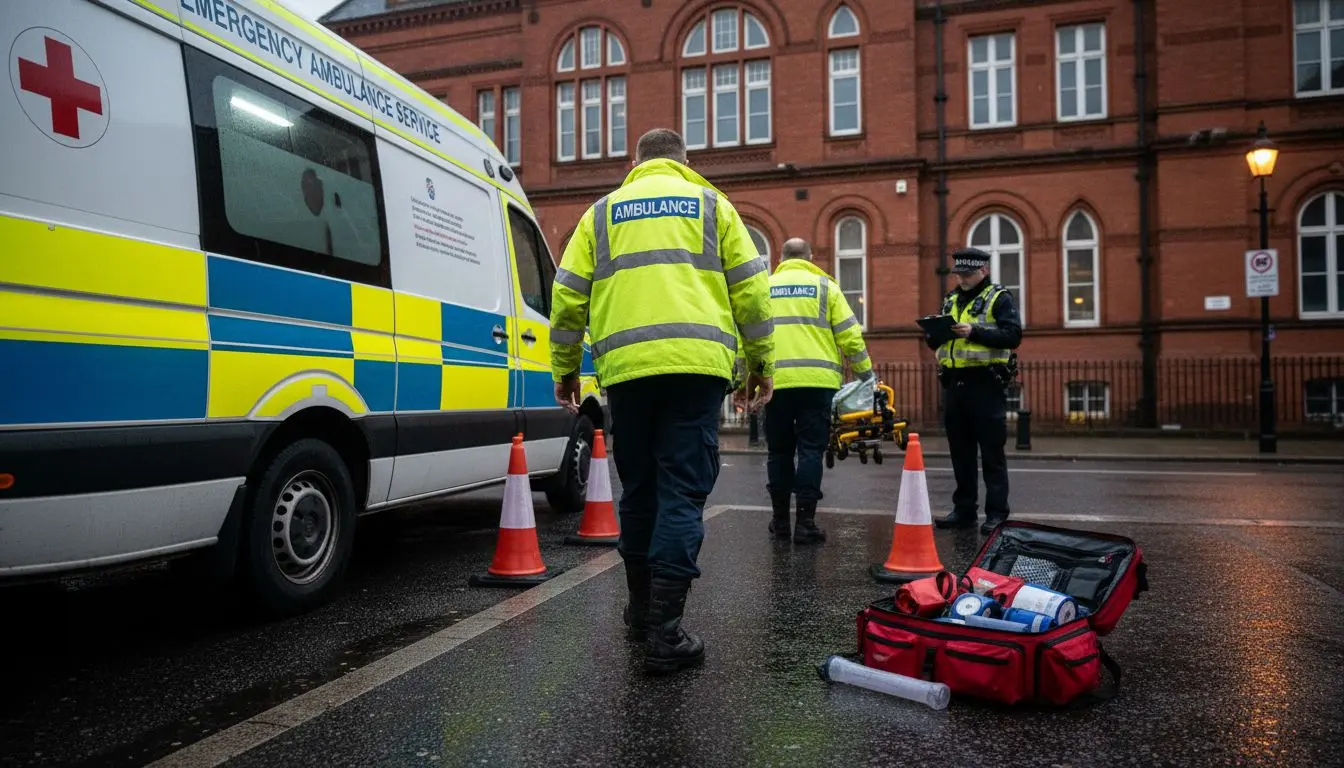
Every shift brings the possibility of unexpected situations that test a security professional’s preparedness. In the United Kingdom, emergency response is not just about reacting in the moment but involves a carefully coordinated system led by local authorities and supported by central government. Understanding this framework—including the clear roles and responsibilities that shape major incident responses—can help security personnel advance their careers and play a critical part in protecting public safety during real crises.
Table of Contents
- Defining Emergency Response In UK Security
- Types Of Emergency Responses And Key Differences
- Principles And Processes Of Multi-Agency Response
- Legal Duties And Required Qualifications For Responders
- Roles, Responsibilities And Common Pitfalls In Practice
Key Takeaways
| Point | Details |
|---|---|
| Emergency Response Framework | The UK’s emergency response comprises coordinated actions from governmental and local agencies to safeguard public safety during crises. |
| Types of Emergencies | Responses are categorised into Public Health Emergencies, Terrorism, Natural Disasters, Infrastructure Failures, and Industrial Incidents. |
| Roles of Responders | Category 1 responders lead emergency preparedness, while Category 2 responders provide essential support and resources. |
| Importance of Multi-Agency Coordination | Effective response relies on clear communication, defined roles, and continuous collaboration among agencies for successful crisis management. |
Defining Emergency Response in UK Security
Emergency response in the United Kingdom represents a sophisticated, multi-layered system designed to protect citizens and maintain national resilience during crisis scenarios. At its core, emergency response involves coordinated actions across governmental and local agencies to manage, mitigate, and recover from potentially dangerous situations that threaten public safety.
The framework for emergency response is comprehensively outlined in the national crisis management guidelines, which emphasize a structured approach to crisis management. Key characteristics of UK emergency response include:
- Prioritising local responder capabilities
- Establishing clear roles and responsibilities
- Implementing scalable support mechanisms
- Protecting vulnerable population groups
- Ensuring rapid and coordinated interventions
The legal and operational landscape of emergency response is intricate, involving multiple stakeholders across different levels of government. Local authorities typically serve as the first line of response, with central government providing supplementary support during major incidents. This principle of subsidiarity ensures that responses are tailored, efficient, and appropriately resourced.
The primary objectives of emergency response in the UK encompass several critical dimensions:
- Protecting human life
- Maintaining critical infrastructure
- Minimising economic disruption
- Preserving societal continuity
- Supporting affected communities
Coordination and preparedness are fundamental to effective emergency response. Agencies continuously conduct training exercises, develop comprehensive contingency plans, and maintain robust communication channels to ensure rapid mobilisation when crises emerge.
Pro tip: Professionals in security should familiarise themselves with local and national emergency response protocols to enhance their operational readiness and understanding of crisis management frameworks.
Types of Emergency Responses and Key Differences
Emergency responses in the United Kingdom are complex and multifaceted, designed to address a wide range of potential threats and crisis scenarios. Emergency planning classifications distinguish between different types of emergencies based on their nature, scale, and potential impact on public safety.
The primary categories of emergency responses in the UK include:
- Public Health Emergencies: Including pandemic outbreaks, disease control, and mass casualty events
- Terrorism and Security Incidents: Covering explosive attacks, marauding terrorist scenarios, and counter-terrorism responses
- Natural Disasters: Addressing flooding, severe weather events, and environmental emergencies
- Infrastructure Failures: Managing critical system breakdowns in utilities, transportation, and communication networks
- Industrial and Technological Incidents: Responding to major accidents, chemical spills, and technological disruptions
A critical distinction exists between Category 1 and Category 2 responders. Category 1 responders, which include emergency services and local authorities, bear primary responsibility for emergency preparedness and initial response. These organisations have statutory duties to:
- Assess potential risks
- Develop comprehensive emergency plans
- Provide immediate on-ground response
- Coordinate multi-agency interventions
- Communicate with the public during crisis situations
Category 2 responders, such as utility companies and transportation providers, play a supporting role by providing essential information and resources during emergency scenarios. This structured approach ensures a coordinated and efficient response mechanism that can adapt to various challenging situations.
The following table contrasts Category 1 and Category 2 responders to clarify their different roles in UK emergency response:
| Attribute | Category 1 Responders | Category 2 Responders |
|---|---|---|
| Organisation types | Emergency services, local authorities | Utility, transport, telecom firms |
| Primary legal duties | Full emergency preparedness and response | Support and cooperation responsibilities |
| Example responsibilities | Lead rescue, public communication | Supply information, restore services |
| Involvement in planning | Central role in plan development | Consulted and provide input |
| Level of statutory obligation | High and direct | Supportive and indirect |
The effectiveness of emergency response depends not just on individual agency capabilities, but on seamless inter-agency collaboration and clear communication protocols.
Scalability is a fundamental principle in UK emergency response. Responses are designed to be flexible, allowing local authorities to manage smaller incidents while enabling rapid escalation to regional or national levels when required. This approach ensures that resources are deployed efficiently and proportionally to the specific nature and severity of the emergency.

Pro tip: Security professionals should familiarise themselves with local emergency response protocols and understand the distinct roles of Category 1 and Category 2 responders to enhance overall crisis management effectiveness.
Principles and Processes of Multi-Agency Response
Multi-agency emergency response in the United Kingdom represents a sophisticated collaborative approach that demands seamless coordination and shared strategic objectives. Partnership mechanisms have been meticulously developed to ensure effective crisis management across various organisational boundaries.
The fundamental principles governing multi-agency response include:
- Establishing clear communication protocols
- Maintaining transparent information sharing
- Defining precise roles and responsibilities
- Creating unified decision-making frameworks
- Developing mutual trust and professional respect
- Implementing flexible and adaptable response strategies
Key structural mechanisms for multi-agency coordination include:
- Local Resilience Forums (strategic regional planning groups)
- Strategic Coordinating Groups (incident-specific management teams)
- Joint Emergency Services Interoperability Principles (standardised response protocols)
- National Risk Assessment Frameworks (comprehensive threat evaluation)
- Integrated Emergency Management Systems (cross-agency communication platforms)
Effective multi-agency response depends fundamentally on building strong interpersonal relationships and maintaining consistent interdepartmental communication channels.
Information sharing represents a critical cornerstone of successful multi-agency responses. Organisations must overcome traditional institutional barriers, creating secure and efficient mechanisms for real-time data exchange. This approach ensures that each agency can access comprehensive situational awareness, enabling more coordinated and rapid interventions.
The crisis management lifecycle typically encompasses three interconnected phases:
Here is a summary table outlining the three key phases of the crisis management lifecycle and their main actions:
| Phase | Main Activities | Key Goal |
|---|---|---|
| Pre-Crisis | Risk analysis, contingency planning | Minimise potential impact |
| Acute Crisis | Incident response, mobilisation | Save lives, control event |
| Post-Crisis | Recovery assessment, learning reviews | Restore services, improve systems |
- Pre-Crisis: Risk assessment, planning, and preventative strategies
- Acute Crisis: Immediate response, resource deployment, and intervention
- Post-Crisis: Recovery, evaluation, and systematic learning
Pro tip: Security professionals should actively participate in cross-agency training exercises and develop strong interpersonal networks to enhance multi-agency collaboration effectiveness.
Legal Duties and Required Qualifications for Responders
The legal framework governing emergency response in the United Kingdom is comprehensively defined by the Civil Contingencies Act 2004, which establishes a robust structure of responsibilities and qualifications for emergency responders. Legal duties for emergency services are categorised into distinct levels with specific statutory obligations.
Responder agencies are classified into two primary categories:
- Category 1 Responders: Core emergency services with full civil protection duties
- Category 2 Responders: Supporting organisations with cooperative responsibilities
Category 1 responders, which include the following organisations, have comprehensive legal responsibilities:
- Local authorities
- Emergency services
- NHS bodies
- Fire and rescue services
- Police forces
Their specific legal duties encompass:
- Conducting comprehensive risk assessments
- Developing emergency response plans
- Maintaining business continuity strategies
- Providing public information during emergencies
- Collaborating with other agencies through Local Resilience Forums
Emergency responders must continuously demonstrate professional competence, adaptability, and commitment to public safety.
Qualification Requirements for emergency responders are rigorous and multi-dimensional. The Minimum Occupational Standards for Emergency Preparedness outline specific competency frameworks across strategic, tactical, and operational levels.
Key professional qualifications and competencies include:
- Advanced risk management skills
- Crisis communication expertise
- Incident command and control training
- Psychological resilience
- Interdisciplinary collaboration capabilities
- Continuous professional development
Pro tip: Security professionals should maintain updated certifications, participate in regular training exercises, and develop a comprehensive understanding of legal frameworks to enhance their emergency response capabilities.
Roles, Responsibilities and Common Pitfalls in Practice
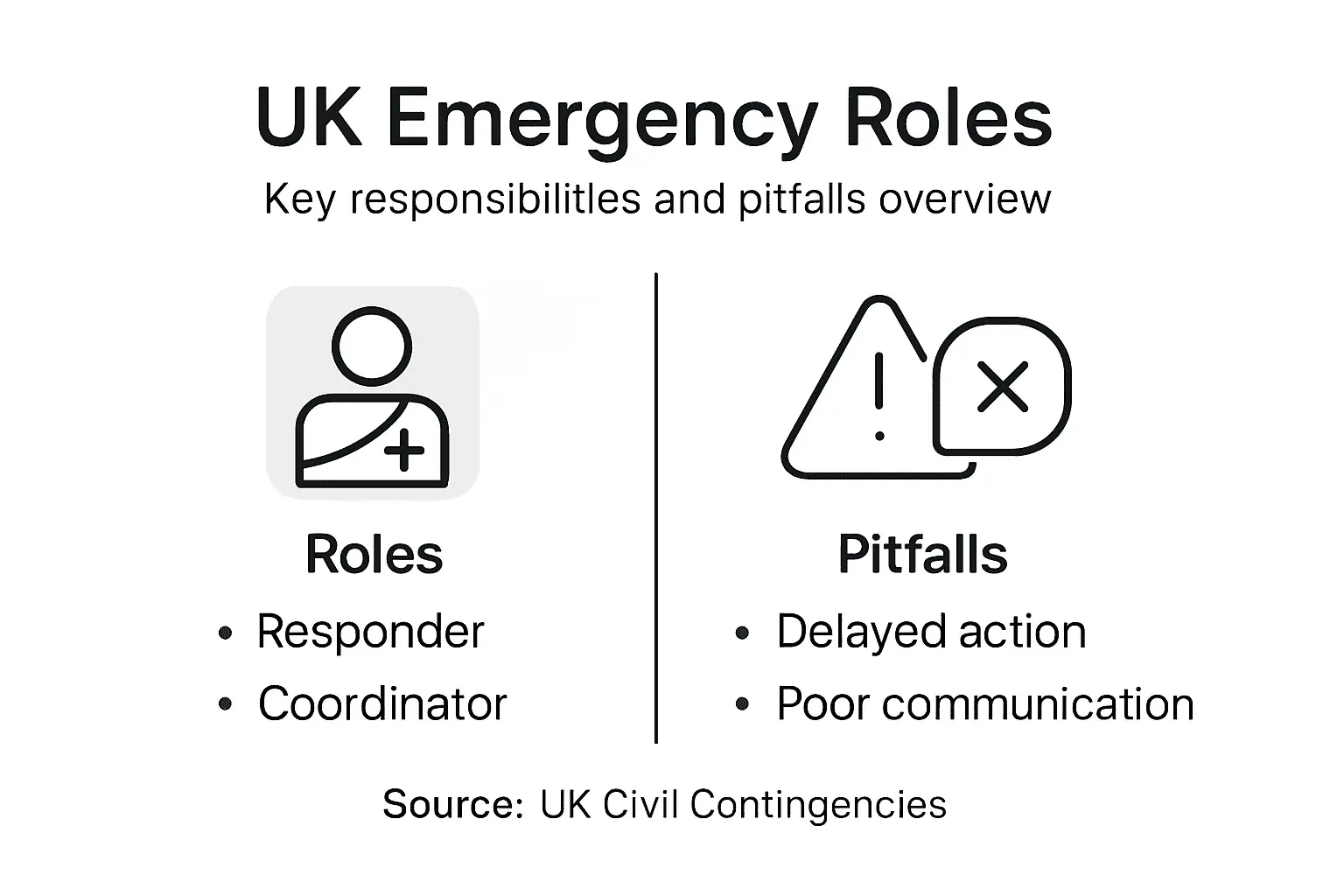
Emergency response in the United Kingdom demands precise role definition and intricate coordination across multiple agencies. Emergency response coordination requires a nuanced understanding of each organisation’s specific responsibilities and potential interaction points.
Key organisational roles in emergency response include:
- Strategic Commanders: Responsible for overall incident management and resource allocation
- Tactical Coordinators: Implementing specific operational strategies
- Operational Responders: Direct frontline personnel managing immediate incident requirements
- Support Staff: Providing critical logistical and administrative support
- Communication Officers: Managing inter-agency and public communication channels
Common operational pitfalls that can compromise emergency response effectiveness include:
- Inadequate communication protocols
- Unclear command hierarchies
- Limited inter-agency training
- Insufficient resource management
- Delayed situational assessment
Effective emergency response hinges on clear communication, well-defined roles, and seamless collaborative mechanisms.
The College of Policing guidance emphasises the importance of structured command and control systems that can dynamically adapt to varying incident complexities. Successful agencies develop robust frameworks that enable:
- Rapid decision-making processes
- Flexible resource deployment
- Comprehensive situational awareness
- Scalable response mechanisms
- Continuous performance evaluation
Incident management requires professionals to navigate complex interpersonal and procedural challenges. Successful responders must demonstrate exceptional adaptability, clear communication skills, and a comprehensive understanding of multi-agency collaboration principles.
Pro tip: Security professionals should regularly participate in multi-agency simulation exercises to develop practical skills in real-world emergency coordination scenarios.
Strengthen UK Security with Skilled Emergency Response Professionals
Understanding the complexities of emergency response in the United Kingdom is vital for protecting communities and ensuring seamless multi-agency collaboration during crises. Whether managing public health emergencies, natural disasters, or security incidents, having the right personnel who grasp concepts like Category 1 and Category 2 responders, clear command structures, and legal obligations is critical. The challenges of communication breakdowns and unclear roles can be addressed by recruiting focused security professionals with specialised expertise in emergency preparedness and response.

Secure your role in enhancing national resilience today with Security Jobs Board. Our platform connects you to tailored security industry opportunities across the United Kingdom where your skills in multi-agency coordination and crisis management are highly valued. For employers looking to fill critical positions that strengthen emergency response readiness, explore our efficient CV database and fast job posting tools to find qualified candidates who understand the demands of UK security protocols. Visit Security Jobs Board to take decisive action now and contribute to safer communities with the right security expertise.
Frequently Asked Questions
What is the purpose of emergency response in the UK?
Emergency response in the UK aims to protect human life, maintain critical infrastructure, and ensure societal continuity during crises. It involves coordinated actions from various governmental and local agencies to manage and mitigate dangerous situations.
What are the primary types of emergencies addressed in UK security?
The primary types of emergencies include public health crises, terrorism and security incidents, natural disasters, infrastructure failures, and industrial accidents. Each type requires a tailored response approach to ensure effective management and recovery.
What distinguishes Category 1 responders from Category 2 responders?
Category 1 responders, such as emergency services and local authorities, are primarily responsible for crisis management and response. In contrast, Category 2 responders, like utility companies, support these efforts by providing essential information and resources during emergencies.
Why is multi-agency coordination critical in emergency response?
Multi-agency coordination is crucial because it ensures effective collaboration among various organisations, promotes comprehensive situational awareness, and enables efficient resource allocation. Clear communication and defined roles help avoid operational pitfalls and enhance overall response effectiveness.
Recommended
- Understanding Why Security Jobs in UK Matter | Brainiac Media
- Why Security Roles Are More Vital Than Ever in the UK|BM
- Why Work In Security Sector: Complete UK Guide | Brainiac Media
- Why Choose Security Jobs: Complete Guide UK | Brainiac Media
- Supply Chain Risk Management: Safeguarding Global Trade - Worldwide Express, Inc.


