
Moving into a new security role in the United Kingdom often means facing fresh challenges around data protection. Keeping pace with the strict requirements of the UK General Data Protection Regulation is more than a legal formality for security professionals: it shapes how organisations build trust and safeguard information. This guide clears up the most important responsibilities, core compliance principles, and practical steps you need to build a solid foundation for lawful and transparent security practices.
Table of Contents
- Defining GDPR Compliance in the UK
- GDPR Principles and Core Legal Framework
- Data Processing Types and Practical Distinctions
- Obligations for Security Professionals and Employers
- Risks, Penalties and Common Pitfalls
- Impact of Recent UK Law Updates on GDPR Compliance
Key Takeaways
| Point | Details |
|---|---|
| GDPR Compliance is Essential | Organisations must ensure compliance with the UK GDPR to maintain trust and avoid severe penalties. |
| Core Principles of Data Protection | Understand and implement the seven fundamental principles of data protection for lawful processing of personal data. |
| Importance of Data Roles | Recognise the distinct roles of Data Controllers and Data Processors to establish clear data handling responsibilities. |
| Ongoing Commitment Required | Compliance with GDPR is a continuous journey, necessitating regular audits and updates to data protection strategies. |
Defining GDPR Compliance in the UK
The UK General Data Protection Regulation (UK GDPR) represents a crucial legal framework that governs how organisations handle personal data. Established following the United Kingdom’s exit from the European Union, this legislation ensures robust protection for individuals’ sensitive information across various sectors, particularly in security and technology-related industries.
Key aspects of GDPR compliance include:
- Protecting personal data with strict security protocols
- Ensuring transparency in data collection processes
- Maintaining individual rights over personal information
- Implementing comprehensive data management strategies
The UK GDPR legal framework mandates that organisations must process personal data fairly, lawfully, and with explicit consent. This means security professionals must develop comprehensive strategies that not only protect data but also respect individual privacy rights. Every interaction involving personal information requires careful consideration of legal and ethical standards.
Under UK regulations, organisations are required to demonstrate accountability through several critical mechanisms. These include conducting regular data protection impact assessments, maintaining detailed processing records, and appointing data protection officers where necessary. The Information Commissioner’s Office (ICO) serves as the primary enforcement body, providing guidance and investigating potential breaches.
Compliance is not just about avoiding penalties – it’s about building trust and demonstrating professional integrity in data handling.
Pro tip: Regularly audit your data processing practices and maintain comprehensive documentation to ensure ongoing GDPR compliance.
GDPR Principles and Core Legal Framework
The UK GDPR establishes a comprehensive legal framework designed to protect personal data and individual privacy rights. Core data protection principles form the foundation of this robust regulatory approach, ensuring organisations handle sensitive information with the utmost care and accountability.
Seven fundamental principles underpin the UK GDPR’s legal structure:
- Lawfulness, fairness, and transparency in data processing
- Purpose limitation for data collection
- Data minimisation to reduce unnecessary information gathering
- Accuracy of stored personal data
- Storage limitation to prevent excessive data retention
- Integrity and confidentiality of data protection
- Accountability for demonstrating compliance
Each principle represents a critical safeguard for individuals’ personal information. Security professionals must understand that these principles are not mere guidelines but legally binding requirements that demand meticulous implementation across all data handling processes. Organisations must develop comprehensive strategies that not only comply with these principles but also embed them into their core operational practices.
The legislative framework goes beyond simple rule-setting, requiring organisations to proactively demonstrate their commitment to data protection. This means implementing robust technical and organisational measures, conducting regular impact assessments, and maintaining transparent documentation of all data processing activities.
Compliance is a continuous journey, not a one-time achievement. organisations must constantly evolve their data protection strategies.
Pro tip: Develop a comprehensive data protection policy that explicitly addresses each of the seven GDPR principles, ensuring your organisation’s ongoing compliance and commitment to data privacy.
Data Processing Types and Practical Distinctions
The UK GDPR introduces critical distinctions in data processing roles and methods that security professionals must thoroughly understand. Data processing categories define the legal responsibilities and compliance requirements for organisations handling personal information.
Two primary roles emerge in data processing:
- Data Controllers: Organisations determining the purposes and means of processing personal data
- Data Processors: Entities processing data on behalf of controllers
- Hybrid Entities: Organisations functioning in both controller and processor capacities
Understanding these roles is crucial for implementing appropriate data protection measures. Data controllers bear primary responsibility for ensuring lawful, fair, and transparent data processing. They must establish clear protocols for data collection, usage, and protection, while processors must follow the controller’s explicit instructions and maintain robust security mechanisms.

To clarify the responsibilities under the UK GDPR, here is a summary of data processing roles and their key compliance requirements:
| Role | Core Responsibility | Key Compliance Requirement |
|---|---|---|
| Data Controller | Determines data purpose and method | Must ensure lawful and transparent processing |
| Data Processor | Processes data for controller | Must follow controller’s instructions rigorously |
| Hybrid Entity | Acts as both controller and processor | Requires dual protocols and enhanced accountability |
The regulation further distinguishes between different processing methods, including automated and manual processing within structured filing systems. Automated processing involves systematic electronic operations, while manual processing relates to structured physical records. Each processing type requires specific compliance strategies, with automated systems demanding more rigorous technological safeguards.
Data processing is not a static concept but a dynamic framework requiring continuous adaptation and vigilance.
Pro tip: Conduct regular audits to clarify your organisation’s data processing roles and implement clear written protocols distinguishing between controller and processor responsibilities.
Obligations for Security Professionals and Employers
The UK GDPR places significant responsibilities on security professionals and employers to protect personal data comprehensively. Accountability and governance measures require organisations to implement robust technical and organisational safeguards that ensure data protection throughout all operational processes.
Key obligations for security professionals include:
- Developing comprehensive data protection policies
- Implementing appropriate security controls
- Conducting regular data protection impact assessments
- Maintaining detailed documentation of data processing activities
- Ensuring transparency in data handling practices
- Training staff on data protection requirements
- Monitoring and updating security mechanisms
Employers must take proactive steps to establish a culture of data protection. This involves creating clear protocols for data handling, defining precise roles and responsibilities, and ensuring that every team member understands their individual accountability. Security professionals play a crucial role in bridging the gap between legal requirements and practical implementation, translating complex regulatory language into actionable organisational strategies.
Critical to compliance is the potential appointment of a Data Protection Officer (DPO), who serves as a central point of expertise and oversight. This role involves monitoring internal compliance, providing advice on data protection obligations, and acting as a key contact point for regulatory authorities and data subjects.
Data protection is not a one-time achievement but a continuous commitment to maintaining the highest standards of personal information security.
Pro tip: Develop a comprehensive internal training programme that regularly updates staff on GDPR requirements and emerging data protection best practices.
Risks, Penalties and Common Pitfalls
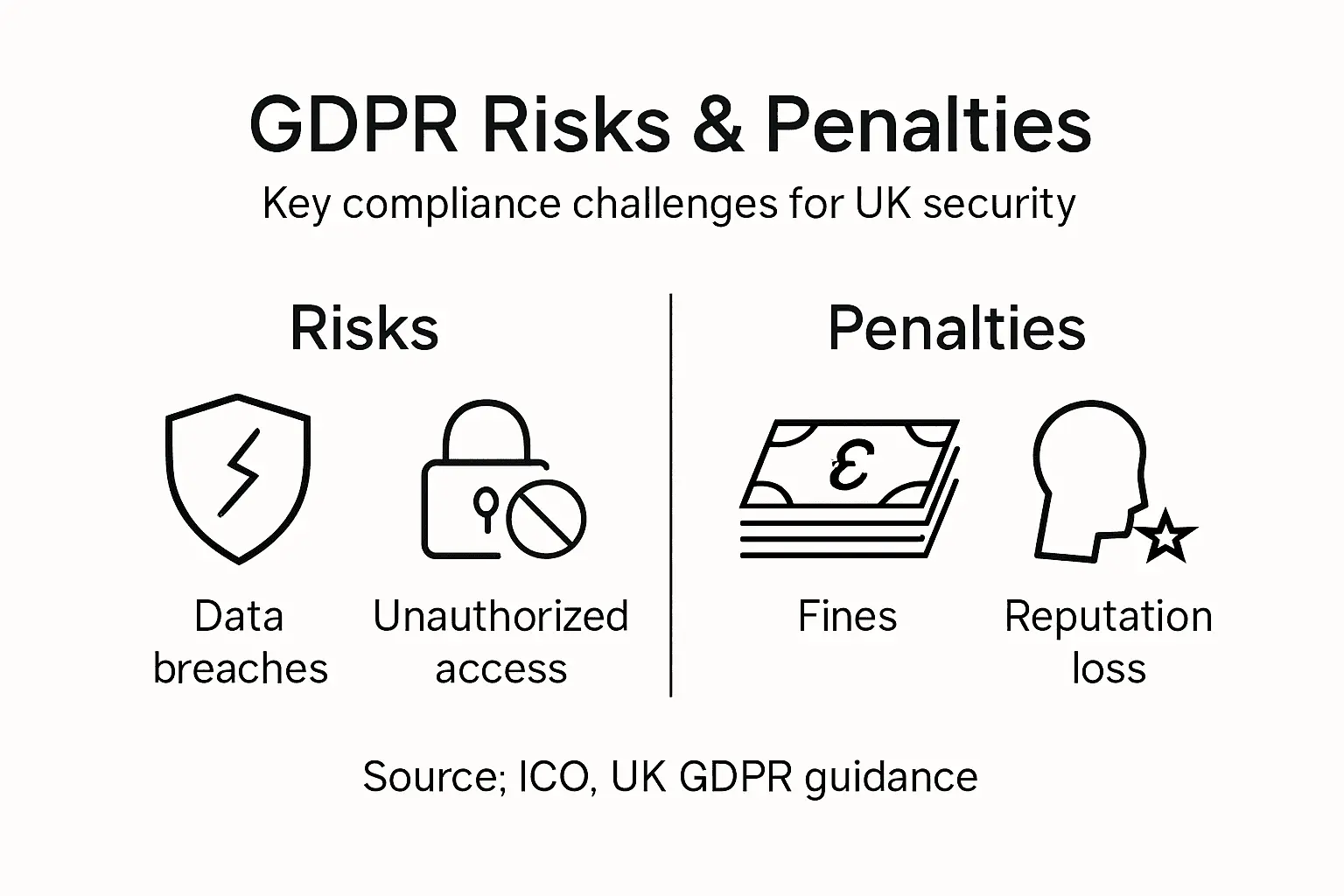
Navigating GDPR compliance requires a comprehensive understanding of potential risks and severe consequences for security professionals and organisations. Without robust data protection strategies, businesses face significant financial and reputational challenges that can fundamentally undermine their operational integrity.
Key risks and potential penalties include:
- Substantial financial fines up to £17.5 million or 4% of global annual turnover
- Mandatory public disclosure of data breaches
- Potential suspension of data processing activities
- Loss of customer trust and market reputation
- Legal proceedings and potential criminal charges
- Mandatory compensation to affected individuals
- Potential director-level personal liability
Common pitfalls frequently emerge from inadequate understanding or implementation of data protection protocols. Security professionals often encounter challenges such as incomplete data mapping, insufficient staff training, and ineffective consent management. These oversights can create significant vulnerabilities, leaving organisations exposed to potential regulatory actions and substantial financial penalties.
Moreover, the regulatory landscape continues to evolve, with enforcement agencies demonstrating increasing sophistication in identifying and prosecuting data protection violations. This dynamic environment requires continuous learning, proactive risk management, and a commitment to maintaining the highest standards of data protection practices.
Non-compliance is not merely a regulatory risk, but a fundamental threat to an organisation’s operational sustainability and reputation.
Pro tip: Conduct quarterly comprehensive compliance audits and maintain a detailed incident response plan to mitigate potential GDPR violation risks.
Impact of Recent UK Law Updates on GDPR Compliance
The UK data protection landscape continues to evolve rapidly, with legislative changes introducing nuanced challenges for security professionals and organisations. Post-Brexit regulatory amendments have fundamentally transformed the data protection framework, creating a distinctly British approach to managing personal information while maintaining alignment with international standards.
Key legislative updates affecting GDPR compliance include:
- Modifications to cross-border data transfer regulations
- Enhanced requirements for international data sharing
- Stricter mechanisms for obtaining explicit consent
- More comprehensive individual privacy rights
- Refined definitions of personal and sensitive data
- Updated breach notification protocols
- Increased enforcement capabilities for regulatory bodies
These updates reflect a strategic response to technological advancements and emerging digital challenges. Security professionals must now navigate a more complex regulatory environment that demands sophisticated understanding of data protection principles. The modifications emphasise not just compliance, but a proactive approach to data governance that prioritises individual privacy and organisational accountability.
The ongoing refinement of UK data protection laws signals a commitment to maintaining robust privacy standards while supporting technological innovation. Organisations must remain agile, continuously updating their internal policies and training programmes to reflect these legislative shifts and demonstrate a genuine commitment to responsible data management.
Here is a summary of recent UK law updates and their impact on GDPR compliance:
| Update Area | New Requirement | Practical Impact on Organisations |
|---|---|---|
| Cross-border Transfers | Stricter transfer rules | Increased documentation and validation needs |
| Consent Procedures | Enhanced explicit consent | More robust verification of user permissions |
| Privacy Rights | Expanded individual rights | Additional user requests and process reviews |
| Regulatory Enforcement | Stronger enforcement powers | Greater risk of significant fines and audits |
Regulatory compliance is not a destination, but a continuous journey of adaptation and improvement.
Pro tip: Establish a dedicated compliance review mechanism that monitors legislative changes and rapidly implements necessary organisational policy updates.
Secure Your Career While Ensuring GDPR Compliance in UK Security
Navigating the complexities of GDPR compliance in the UK security sector demands vigilance, expertise, and a commitment to data protection principles such as transparency, accountability, and lawful processing. Whether you are a security professional seeking roles that prioritise these standards or an employer aiming to hire candidates well-versed in UK data protection obligations, aligning your career or recruitment efforts with GDPR-aware organisations is critical.

Discover tailored opportunities and trusted talent through The Security Jobs Board where every job listing and candidate profile respects the highest standards of data integrity and confidentiality. Act now to connect with employers who value your understanding of GDPR, or find security professionals equipped to uphold evolving UK data protection laws. Visit The Security Jobs Board and start your journey to a compliant and rewarding security career today.
Frequently Asked Questions
What is GDPR compliance in the UK?
GDPR compliance in the UK involves adhering to the UK General Data Protection Regulation, which governs how organisations handle personal data to ensure the protection of individuals’ privacy rights.
Why is GDPR compliance important for security professionals?
GDPR compliance is crucial for security professionals as it establishes legal frameworks to protect personal data, ensuring that organisations avoid legal penalties and maintain trust with customers.
What are the key principles of UK GDPR?
The key principles of UK GDPR include lawfulness, fairness, and transparency in data processing, purpose limitation, data minimisation, accuracy, storage limitation, integrity, confidentiality, and accountability in handling personal information.
What are the consequences of non-compliance with GDPR?
Consequences of non-compliance with GDPR can include substantial fines, loss of customer trust, mandatory public disclosure of data breaches, and potential legal actions against the organisation.


