
Physical threats account for over 60 percent of all security breaches in organisations worldwide. Protecting people, assets, and sensitive data from these risks is no longer just a matter of locked doors and CCTV cameras. A true understanding of physical security means recognizing the complex strategies and evolving technologies needed to keep every corner of a facility secure. Knowing which measures matter most can help any organisation reduce vulnerabilities and strengthen their overall protection.
Table of Contents
- Physical Security Definition And Core Concepts
- Types Of Physical Security Measures Used
- How Physical Security Works In Practice
- Legal And Regulatory Requirements In The UK
- Roles And Responsibilities In Physical Security
- Common Risks And Mistakes To Avoid
Key Takeaways
| Point | Details |
|---|---|
| Holistic Security Approach | Effective physical security combines technology, human expertise, and protocols to protect organizational assets. |
| Layered Protection Strategies | Implementing deterrence, detection, and delay measures ensures comprehensive threat mitigation. |
| Regulatory Compliance | Understanding and adhering to legal requirements, such as the Data Protection Act and security frameworks, is essential for effective security management. |
| Continuous Improvement | Regular assessments and updates to security protocols are vital to adapt to evolving threats and vulnerabilities. |
Physical Security Definition And Core Concepts
Physical security is a comprehensive approach to protecting an organisation’s critical assets, people, and resources from potential threats and unauthorized access. According to Coursera, physical security involves strategic measures designed to restrict access and implement protective mechanisms against environmental hazards while safeguarding hardware, software, data, and network infrastructure.
At its core, physical security encompasses multiple strategic layers of protection. Wikipedia highlights that these strategies are fundamentally aimed at preventing unauthorized entry to facilities, equipment, and critical resources. The primary objectives include protecting personnel, preventing theft, mitigating potential attacks, and maintaining the integrity of an organisation’s physical environment.
Key components of physical security typically include:
- Access Control Systems: Advanced technologies like biometric scanners, key card entry, and security checkpoints
- Surveillance Technologies: CCTV cameras, motion sensors, and real-time monitoring systems
- Perimeter Protection: Fencing, barriers, security personnel, and controlled entry/exit points
- Environmental Controls: Protection against fire, water damage, electrical failures, and other potential hazards
Successful physical security strategies require a holistic approach that integrates technological solutions, human expertise, and systematic protocols. Security professionals must continuously assess potential vulnerabilities, implement adaptive protection measures, and remain vigilant against evolving threats in an increasingly complex security landscape.
Types Of Physical Security Measures Used
Physical security measures represent a comprehensive suite of strategies designed to protect organisational assets from potential threats. According to the National Protective Security Authority, these measures are strategically crafted to deter, detect, and delay unauthorized access to facilities through various integrated systems and technologies.
Perimeter protection forms a critical first line of defence in physical security. Wikipedia highlights the importance of boundary demarcation, noting that different types of fencing like chain-link, palisade, and welded wire mesh serve not just as physical barriers but as psychological deterrents to potential intruders. These perimeter solutions create an immediate visual and physical obstruction that signals restricted access.
Comprehensive physical security measures typically encompass multiple interconnected strategies:
-
Access Control Systems
- Biometric scanners
- Keycard entry mechanisms
- Security checkpoints
- Digital authentication platforms
-
Surveillance Technologies
- CCTV camera networks
- Motion detection sensors
- Real-time monitoring systems
- Infrared and thermal imaging
-
Physical Barriers
- Security gates
- Turnstiles
- Reinforced doors and windows
- Vehicle blockades
-
Environmental Protection
- Fire suppression systems
- Water damage prevention
- Electrical surge protection
- Climate control mechanisms
The effectiveness of physical security measures relies on their seamless integration, creating layered protection that addresses potential vulnerabilities from multiple perspectives.
 Security professionals must continually evaluate and adapt these systems, recognizing that robust protection demands both technological sophistication and human vigilance.
How Physical Security Works In Practice
Physical security operates through a sophisticated, multi-layered approach designed to protect organisational assets comprehensively. According to Syscotech, effective physical security functions through five critical stages: deterrence, detection, delay, response, and recovery. This systematic methodology ensures that potential security threats are addressed proactively and comprehensively.
Taylor Francis emphasises that implementing physical security requires integrating multiple protective elements. These include site features, building characteristics, electronic systems, and operational protocols that work in concert to create robust, multi-dimensional protection strategies. The goal is to create an environment where potential threats are systematically identified, prevented, and mitigated before they can cause significant damage.
The practical implementation of physical security typically involves several interconnected strategies:
Deterrence Mechanisms
- Visible security personnel
- Warning signs and security notices
- Well-lit perimeters
- Obvious surveillance equipment
Detection Systems
- Motion sensors
- CCTV cameras
- Alarm systems
- Access control logs
Delay Tactics
- Security checkpoints
- Reinforced entry points
- Controlled access corridors
- Physical barriers and obstacles
Successful physical security is not about creating an impenetrable fortress, but developing an adaptive, intelligent system that responds dynamically to potential risks. Security professionals must continuously evaluate and refine their approaches, understanding that threats evolve and protection strategies must remain flexible and responsive to changing environmental conditions.
Legal And Regulatory Requirements In The UK
Navigating the legal landscape of physical security in the United Kingdom requires a comprehensive understanding of multiple regulatory frameworks and statutory requirements. Wikipedia highlights the critical Security Policy Framework, which establishes mandatory security guidelines for government departments, providing a comprehensive blueprint for governance, information protection, and physical security standards across public sector organisations.
Beyond governmental regulations, the UK has developed innovative approaches to security standardisation. Wikipedia introduces Secured by Design, a pioneering police initiative that influences construction and architectural standards to proactively prevent crime. This approach demonstrates how legal requirements extend beyond traditional security measures, embedding protective strategies directly into infrastructure design and urban planning.
Key legal considerations for physical security in the UK include:
Regulatory Compliance Areas
- Data Protection Act 2018
- Health and Safety at Work Act
- Private Security Industry Act
- Counter-Terrorism and Security Act
- General Data Protection Regulation (GDPR)
Mandatory Security Requirements
- Conducting thorough risk assessments
- Implementing appropriate access control mechanisms
- Maintaining comprehensive security documentation
- Regular staff training on security protocols
- Ensuring transparent incident reporting procedures
Professionals in the physical security sector must remain vigilant and adaptive, understanding that legal requirements are not static but continuously evolving. Staying informed about regulatory changes, security screening practices, and emerging legislative trends is crucial for maintaining compliance and effectively protecting organisational assets.
Roles And Responsibilities In Physical Security
Physical security professionals play a critical role in protecting organisational assets, people, and infrastructure through strategic and operational competencies. Wikipedia highlights the significance of Chartered Security Professionals in the UK, who are recognized for their advanced skills and adherence to rigorous standards set by the Security Institute.
According to UK Government Guidelines, defining clear roles and responsibilities is fundamental to effective security management. This involves comprehensive emergency response planning, personal security protocols, and a systematic approach to identifying and mitigating potential threats across various environments.
Key roles within physical security typically include:
Strategic Security Roles
- Security Managers: Oversee comprehensive security strategies
- Risk Assessment Specialists: Analyze and predict potential vulnerabilities
- Compliance Officers: Ensure adherence to legal and regulatory standards
- Security Consultants: Provide expert advice on protective measures
Operational Security Roles
- Security Guards: Provide on-site physical protection
- CCTV Operators: Monitor surveillance systems
- Access Control Specialists: Manage entry and exit points
- Security Response Teams: Rapidly address and neutralize potential threats
Professionals interested in understanding the nuanced landscape of security roles can explore different types of security positions to gain deeper insights into this dynamic and critical industry. Success in physical security demands continuous learning, adaptability, and a commitment to protecting people and assets in an ever-evolving threat landscape.
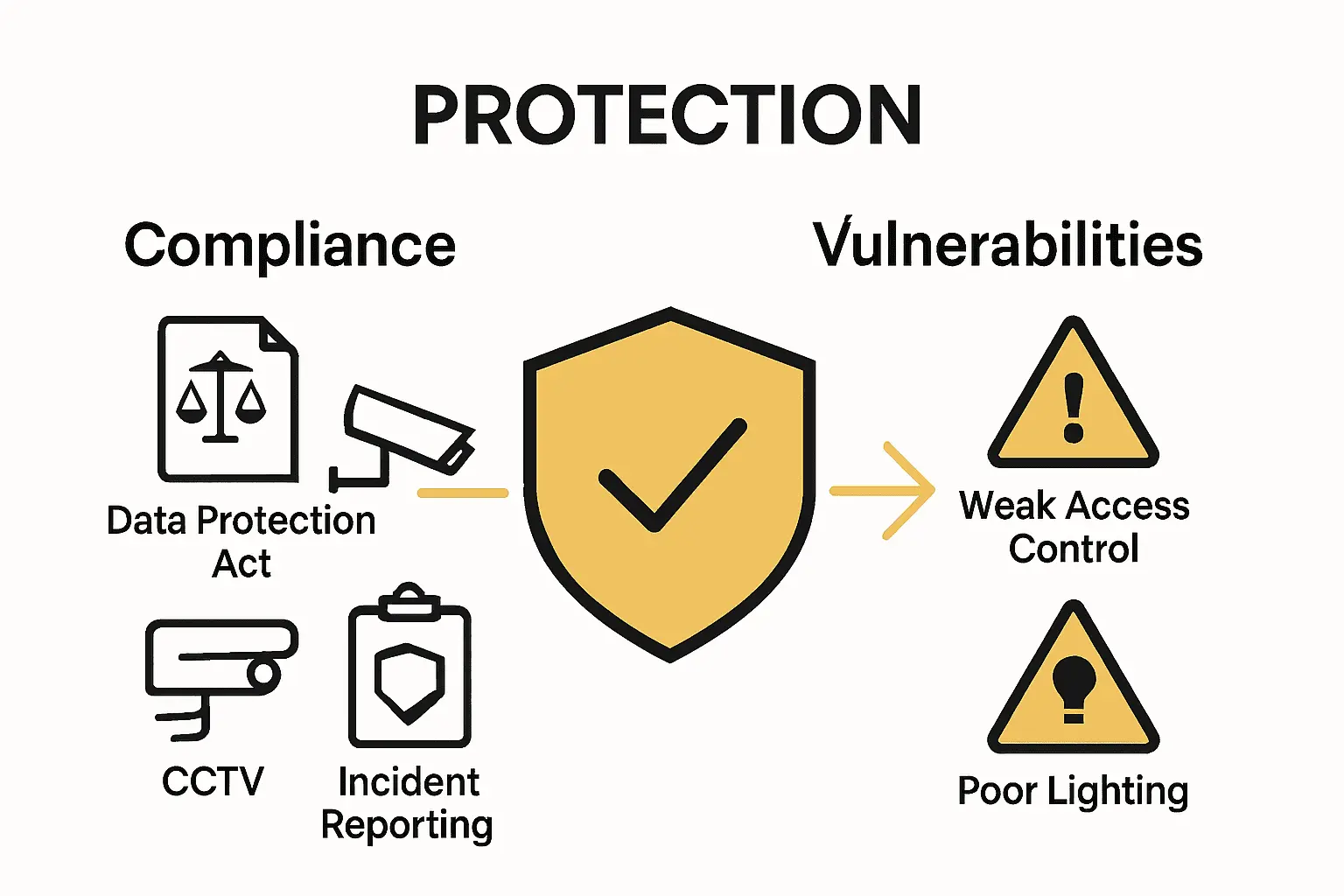
Common Risks And Mistakes To Avoid
Physical security is a complex discipline where even minor oversights can lead to significant vulnerabilities. Clearway emphasizes that common physical security risks frequently stem from inadequate access controls and insufficient perimeter protection, which can be effectively mitigated through comprehensive security assessments and tailored protective measures.
Clear Watch Security highlights that overlooking critical security features can create substantial organisational risks. Understanding and addressing these potential weaknesses is crucial for developing a robust security strategy that protects people, assets, and infrastructure from potential threats.
Critical Security Vulnerabilities
- Weak or inconsistent access control systems
- Inadequate surveillance coverage
- Poor lighting in critical areas
- Lack of regular security audits
- Insufficient staff training
- Outdated security technologies
Potential Consequences of Security Mistakes
- Increased risk of unauthorized entry
- Higher likelihood of theft or vandalism
- Compromised employee and visitor safety
- Potential legal and financial liabilities
- Reputational damage to the organisation
- Reduced stakeholder confidence
Professionals can learn more about avoiding these pitfalls by exploring understanding the role of security guards, which provides insights into proactive security management and comprehensive threat mitigation strategies. Successful physical security requires continuous learning, adaptability, and a commitment to maintaining rigorous protective protocols.
Advance Your Physical Security Career with Expert Support
Understanding the intricate layers of physical security is essential for success in this demanding field. This guide highlights critical challenges such as access control, surveillance, and compliance with UK legal regulations—areas where skilled professionals make all the difference. Whether you are aiming to become a Security Manager, Risk Assessment Specialist, or part of an operational security team, recognising these key roles and responsibilities within physical security is the first step towards a fulfilling career.

Take control of your future today by exploring tailored security job opportunities at the Security Jobs Board. Find roles that match your expertise and ambitions, upload your CV, and connect directly with UK employers who value your skills in managing complex physical security challenges. Start your journey now to make a meaningful impact protecting people and assets—visit Security Jobs Board and secure your place in the UK security sector.
Frequently Asked Questions
What is physical security?
Physical security is a comprehensive approach aimed at protecting an organization’s critical assets, people, and resources from potential threats and unauthorized access, utilizing various strategic measures.
What are the key components of physical security?
The key components include access control systems, surveillance technologies, perimeter protection, and environmental controls designed to deter, detect, and delay unauthorized access or potential threats.
How does physical security work in practice?
Physical security operates through a multi-layered approach involving deterrence mechanisms, detection systems, and delay tactics to prevent potential threats from causing harm before they can escalate.
What legal requirements should organizations follow for physical security?
Organizations must adhere to various laws like the Data Protection Act 2018, the Health and Safety at Work Act, and implement mandatory protocols including thorough risk assessments, maintenance of security documentation, and regular staff training.
Recommended
- The Essential Guide to Choosing the Security Industry|BM
- Top Security Companies Hiring in the UK: Complete Guide|BM
- Understanding Why Security Jobs in UK Matter | Brainiac Media
- Why Security Roles Are More Vital Than Ever in the UK|BM
- How you can protect yourself from being hacked-Cyber Security Guide
- How to Secure Your Data: Essential Steps for Protection – buy2fix


